Why study engineering in 2026?
Employability, salaries, real-world impact: five solid reasons to aim for an engineering degree this year, and what it actually changes for your future.

In an age of artificial intelligence, the energy transition and Morocco’s industrial transformation, you might think engineering jobs are under threat. The opposite is true: they have never been more strategic. Here are five solid reasons to aim for an engineering degree in 2026.
1. Employability that holds up
Engineers are among the most sought-after profiles, and that is not weakening. In Morocco, the automotive industry, aerospace, digital, energy and construction all need sharp technical skills. An engineering degree opens a wide range of outcomes, which makes your professional future safer in an uncertain world.
2. Skills AI does not replace
Far from making engineers obsolete, AI increases their value. It is engineers who design, deploy and oversee these technologies. The core skills of the job (solving complex problems, designing systems, thinking critically, connecting theory to the field) remain deeply human and hard to automate.
3. Real impact on the real world
Engineering means building things that exist: an application used by thousands of people, a more efficient production line, a bridge, an energy network. For many students that is a deep source of motivation: seeing your work take shape and genuinely serve a purpose.
- You turn ideas into tangible solutions.
- You take part in projects that visibly affect society.
- You develop pride in work well done, which is rare and lasting.
4. Broad room to grow
An engineering degree does not confine you: it opens things up. Many engineers move into management, project management, entrepreneurship or consulting. The training builds a versatility, technical, methodical and analytical, that applies well beyond the first job.
- Progression into project manager or technical manager roles.
- Starting a business, thanks to a culture of design and prototyping.
- Mobility between sectors, because engineering methods transfer.
5. Training that teaches you how to learn
The technical world moves fast: today’s tools will not be tomorrow’s. The real value of an engineering education is not a list of technologies but a way of thinking and an ability to keep learning. That is the skill that keeps engineers useful over time, whatever the market does.
What makes the difference: practice
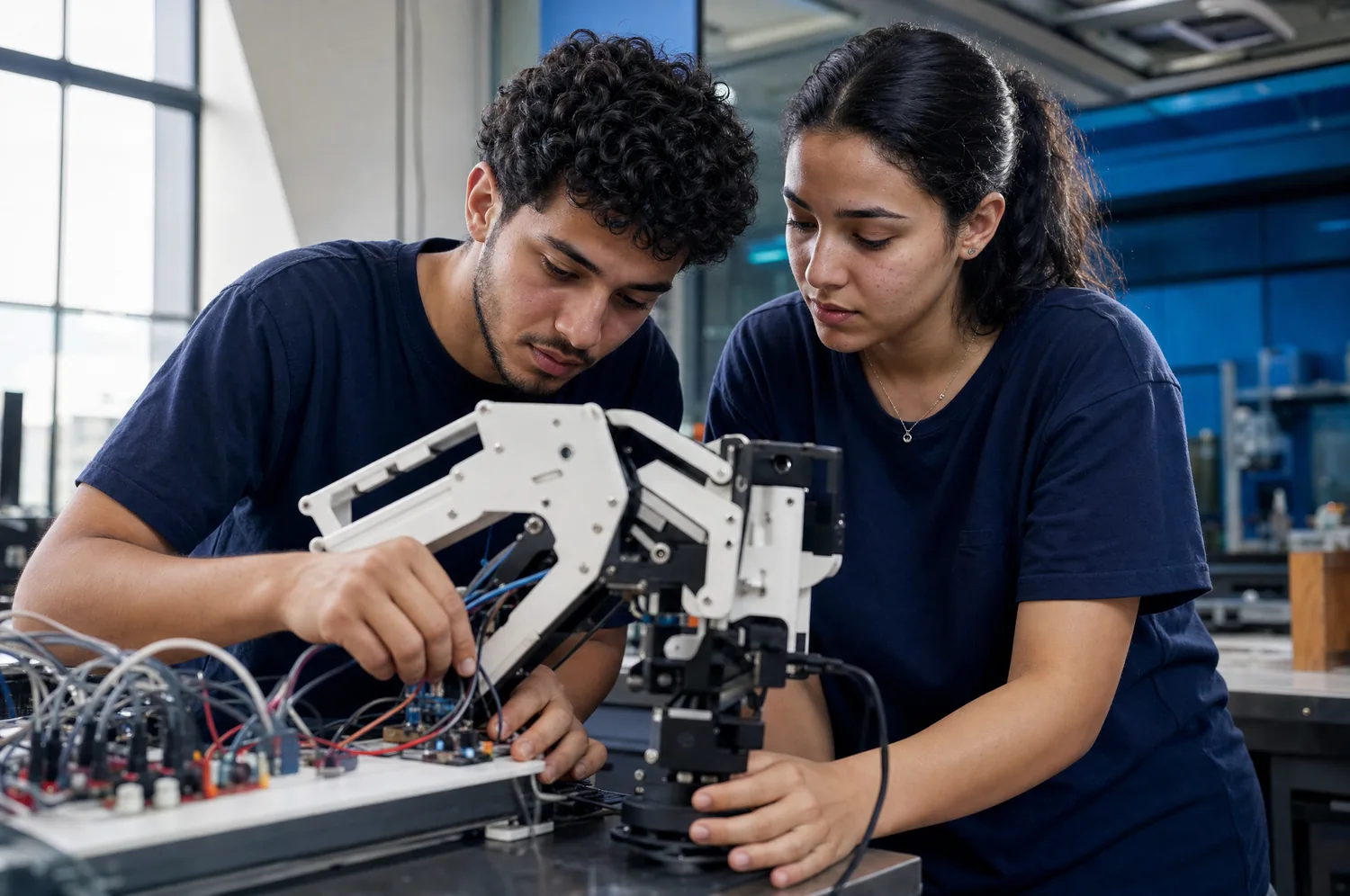
All these reasons only hold if the training is concrete. An engineer is formed by building, not only by listening. That is why the project dimension matters: placements, practical work, and somewhere to prototype such as our Sup’Factory, where engineering students run real projects in teams.
In short
Choosing engineering in 2026 means betting on employability, impact, progression and a durable way of thinking. If that path speaks to you, the most important thing is choosing the right school and the right programme. Our guidance team is there to help you build a path that suits you and prepares a solid future.